September 11, 2026
Consistent dog training can play an important role in modifying behavior by helping dogs understand expectations, develop dependable habits, and respond appropriately in different situations. Training is most effective when it combines patience, clear communication, repetition, and structured reinforcement. Rather than expecting immediate perfection, owners can focus on gradual improvements that become more reliable through regular practice. Working with a local dog trainer can also help owners identify individual behavioral patterns and develop training strategies suited to a dog's temperament, age, and learning style.
1. Establishing Clear Communication
Understanding canine communication is an important starting point for effective training. Dogs communicate through body posture, facial expressions, vocalizations, movement, and other behavioral signals. Observing changes in tail position, ears, posture, and attention can provide useful clues about whether a dog is relaxed, distracted, fearful, or ready to engage. Recognizing these signals allows owners to adjust their approach and avoid pushing a dog beyond its current comfort level.
Consistency in verbal commands and hand signals also reduces confusion. When family members use different words for the same behavior, a dog may have difficulty determining what is expected. Using the same concise cue each time creates a clearer connection between the instruction and the desired response. A local dog trainer may help household members establish consistent cues so everyone reinforces the same expectations.
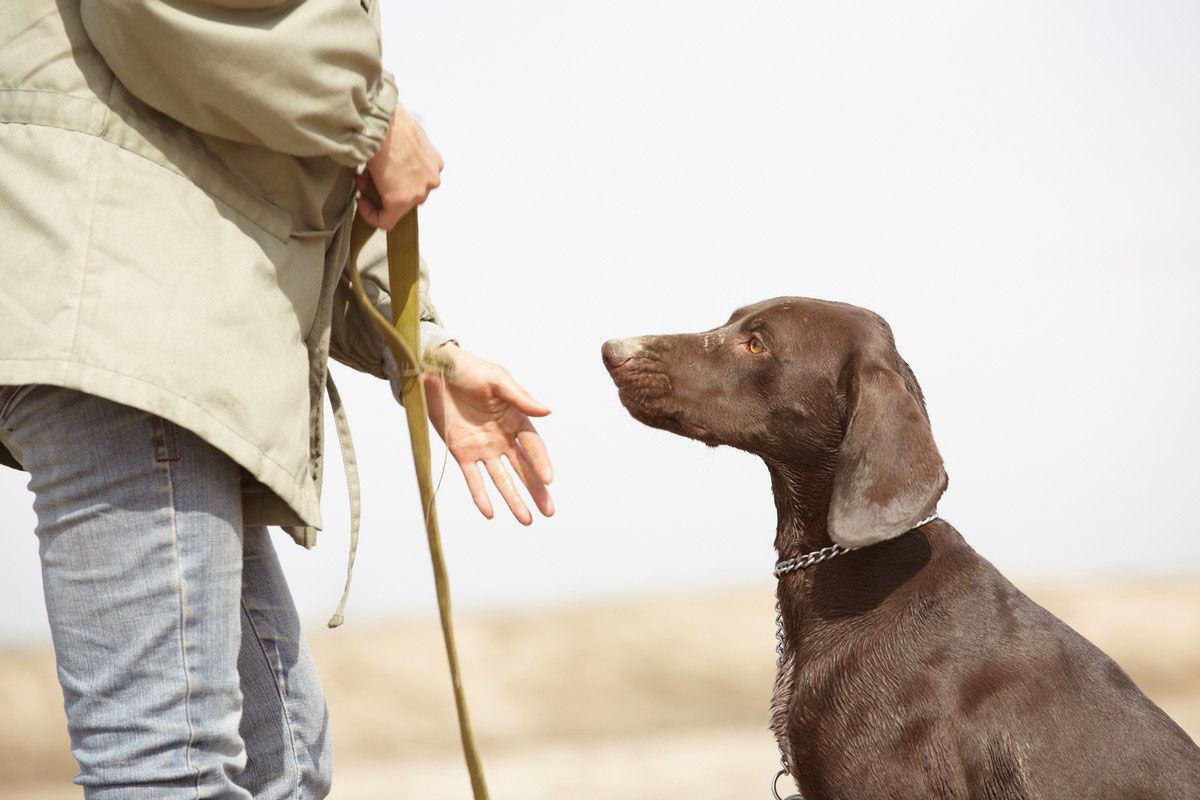
Nonverbal communication can further strengthen this process. Dogs often notice posture, movement, eye direction, and gestures before responding to spoken instructions. Combining predictable verbal commands with consistent body language creates a more complete communication system. Clear cues can reduce frustration for both the dog and owner while making it easier to practice learned behaviors in everyday situations.
2. Reinforcing Positive Behavior
Positive reinforcement encourages desirable behavior by connecting appropriate actions with outcomes the dog values. Treats, praise, toys, affection, and opportunities to play can all function as rewards depending on the individual dog. Delivering a reward shortly after the desired behavior makes the connection easier to understand. As the dog becomes more familiar with the behavior, rewards can gradually become less frequent while praise and other forms of reinforcement continue.
Timing and consistency are particularly important because owners can unintentionally reinforce unwanted behaviors. For example, providing attention when a dog jumps may encourage jumping if the dog views attention as rewarding. Owners should therefore consider what happens immediately before and after a behavior. A local dog trainer can observe these interactions and help identify patterns that owners may not notice during everyday routines.
Rewards should also match the difficulty of the task and the dog's preferences. A quiet environment may require only verbal praise, while practicing around unfamiliar people or other dogs may call for a higher-value reward. Adjusting reinforcement according to the situation can maintain motivation without creating unnecessary dependence on treats.
3. Building Trust and Strengthening the Bond
Trust influences a dog's willingness to participate in training and explore unfamiliar tasks. Predictable, patient interactions can help dogs understand that training is a safe activity rather than something associated with fear or uncertainty. When dogs are comfortable with the person guiding them, they may be more willing to attempt new behaviors and recover from mistakes.
Training also provides regular opportunities for dogs and owners to spend focused time together. Shared activities can improve mutual understanding while teaching owners to recognize subtle behavioral signals. A local dog trainer can demonstrate techniques that owners can continue practicing at home, allowing training to become part of normal routines rather than an activity limited to formal sessions.
Confidence often develops alongside trust. Successfully completing manageable tasks gives dogs opportunities to experience positive outcomes. Gradually increasing the difficulty of exercises can build resilience while preventing frustration. A confident dog may be more willing to respond in unfamiliar environments, making it easier to transfer established skills from the home to walks, public spaces, or social situations.
4. Reducing Anxiety and Stress Through Predictability
Dogs often benefit from routines because predictable experiences help them anticipate what will happen next. Regular feeding, walking, rest, play, and training schedules can provide structure throughout the day. Training sessions that follow familiar patterns may also reduce uncertainty by giving dogs clear expectations about which behaviors lead to positive outcomes.
Owners should watch for possible signs of stress, including excessive barking, avoidance, pacing, destructive behavior, or difficulty concentrating. These behaviors can have different causes, so training methods may need to be adjusted according to the individual dog and situation. A local dog trainer can help evaluate environmental triggers and determine whether shorter sessions, fewer distractions, or a slower progression would be appropriate.
The training environment can have a substantial effect on concentration. Beginning in a quiet, familiar location allows a dog to focus on basic skills before distractions are introduced. Owners can then gradually practice around new sounds, people, animals, and environments. This progressive approach helps dogs learn that familiar commands still apply even when surroundings change.
5. Promoting Faster Learning Through Repetition
Repetition helps strengthen the connection between a cue and a behavior. Short, regular sessions are often more manageable than occasional lengthy sessions because they provide repeated opportunities to practice without overwhelming the dog. Revisiting previously learned skills also helps maintain them while new behaviors are introduced.
Consistency does not mean repeating an exercise endlessly when a dog is no longer engaged. Effective practice requires attention to the dog's motivation, energy, and understanding. Sessions can be adjusted by changing rewards, practicing in a different location, or briefly switching to an easier task. Guidance from a local dog trainer can help owners establish realistic training schedules that provide sufficient repetition while keeping sessions engaging.
Repeated exposure can also support habituation when introduced appropriately. Dogs may gradually become accustomed to ordinary sounds, objects, environments, and experiences when exposure occurs at a manageable intensity. Practice should progress at a pace that allows the dog to remain comfortable enough to learn rather than simply endure the situation.
6. Developing Problem-Solving Skills
Training can provide valuable mental stimulation in addition to teaching obedience skills. Activities involving scent work, puzzles, object searches, obstacle navigation, and interactive games encourage dogs to investigate their environment and make choices. Mental challenges can complement physical exercise and give dogs constructive outlets for curiosity and energy.
Problem-solving exercises can also encourage independence. Instead of immediately guiding a dog through every step, owners can sometimes provide an opportunity for the dog to determine which behavior earns the desired outcome. When structured appropriately, this approach encourages active participation and may increase confidence in unfamiliar situations.
The ultimate objective is for learned behaviors to function outside controlled practice sessions. A dog that reliably responds in the living room may initially struggle with the same cue at a park because of unfamiliar distractions. Gradually increasing environmental complexity helps bridge this gap. A local dog trainer can help owners determine when a dog is ready for additional distractions and how to reinforce appropriate responses in real-world situations.
Owners can support lasting results by making training part of everyday interactions rather than relying exclusively on formal sessions. Asking for a calm behavior before opening a door, practicing recall during appropriate activities, or reinforcing polite greetings can turn ordinary moments into useful learning opportunities. With patience and consistent expectations, training can strengthen communication while helping dogs develop behaviors that support safer and more enjoyable interactions at home and in the community. Contact our team at TriStar K-9 Obedience today and learn more about our dog training services.